Executive Summary
In short: Australian business owners and executives in logistics and procurement face rising costs, persistent disruptions from vast geography and extreme weather, labour shortages, legacy systems, and thin margins in a high-cost environment. Custom AI-powered procurement software delivers predictive sourcing, real-time optimisation, automated workflows, seamless integrations, and enhanced visibility — enabling 5-20% logistics cost reductions, 5-15% procurement savings, 20-30% inventory improvements, and greater operational resilience tailored to Australian conditions.
What’s next? Businesses adopting tailored AI solutions in 2026 will achieve lower operational costs, higher profitability, improved decision-making, and a competitive edge. The immediate step is to assess your current systems and explore custom integration options that align with your unique operations and regulatory needs.
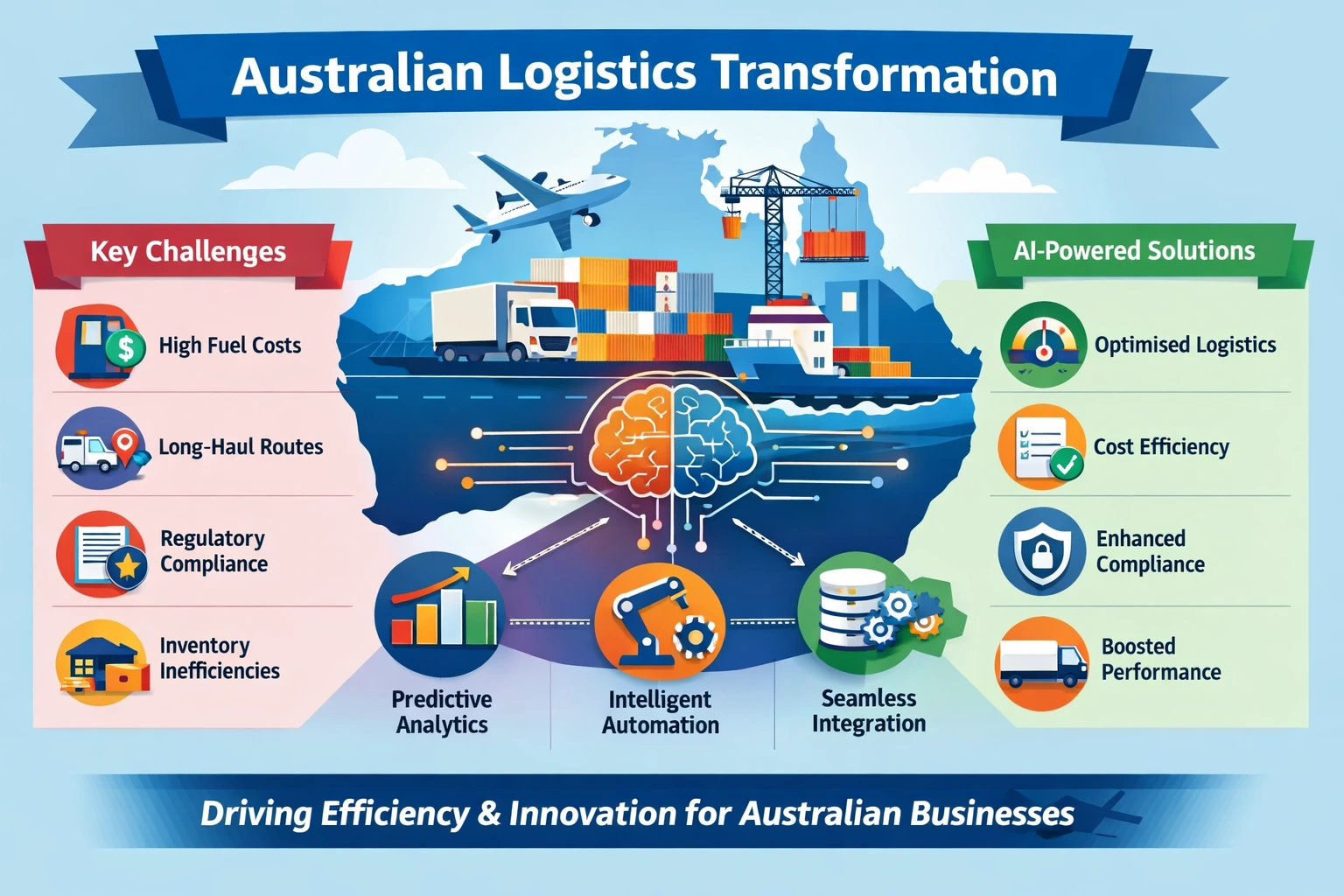
Australian logistics and procurement leaders are under intense pressure. Fuel costs, labour shortages, port congestion, extreme weather events, and vast distances across the continent continue to challenge even the most efficient operations. In 2026, these issues are compounded by rising compliance demands, competitive pressures from tech-enabled rivals, and the need to meet growth targets while controlling expenses.
Many businesses still rely on outdated legacy systems or generic off-the-shelf tools that fail to address unique Australian challenges — such as long-haul routes from Brisbane to Perth, regulatory requirements like the Security of Critical Infrastructure (SOCI) Act, or data sovereignty concerns. The result? Inefficient sourcing & procurement processes, excess inventory, suboptimal routing, and missed opportunities for efficiency gains.
Custom AI-powered procurement software is transforming this landscape. By combining intelligent automation, predictive analytics, and seamless integrations with existing databases and ERP systems, tailored solutions deliver measurable improvements in logistics solutions and overall business performance. This article explores the pain points, why the situation is worsening, and how custom AI delivers real transformation for Australian businesses.
The Growing Pains in Australian Logistics & Procurement
Australian businesses operate in one of the most challenging logistics environments globally. The domestic freight task is projected to grow significantly, with road freight alone generating substantial revenue amid population growth and e-commerce demands. However, structural pressures persist.
Key challenges include:
- High and Rising Operational Costs: Fuel, labour, and transport expenses continue to squeeze margins. Insolvencies in the transport sector have more than doubled in recent years due to costs outpacing freight rates.
- Supply Chain Disruptions: Extreme weather (floods costing billions in repairs), port issues, and geopolitical factors create unpredictability, especially across vast distances.
- Labour Shortages: Persistent gaps in skilled workers for warehousing, driving, and logistics increase reliance on manual processes and drive up wages.
- Legacy Systems and Poor Visibility: Many organisations struggle with data silos, manual procurement, inaccurate forecasting, and limited real-time insights, leading to stockouts, overstock, and delayed decisions.
- Compliance and Data Challenges: Requirements under the SOCI Act and Privacy Act demand secure, sovereign data handling that generic cloud tools often fail to guarantee fully.
These issues trigger missed growth targets, eroded profitability, and frustration for detailed-oriented executives seeking analytical, data-driven improvements.
Why the Situation Is Worsening in 2026
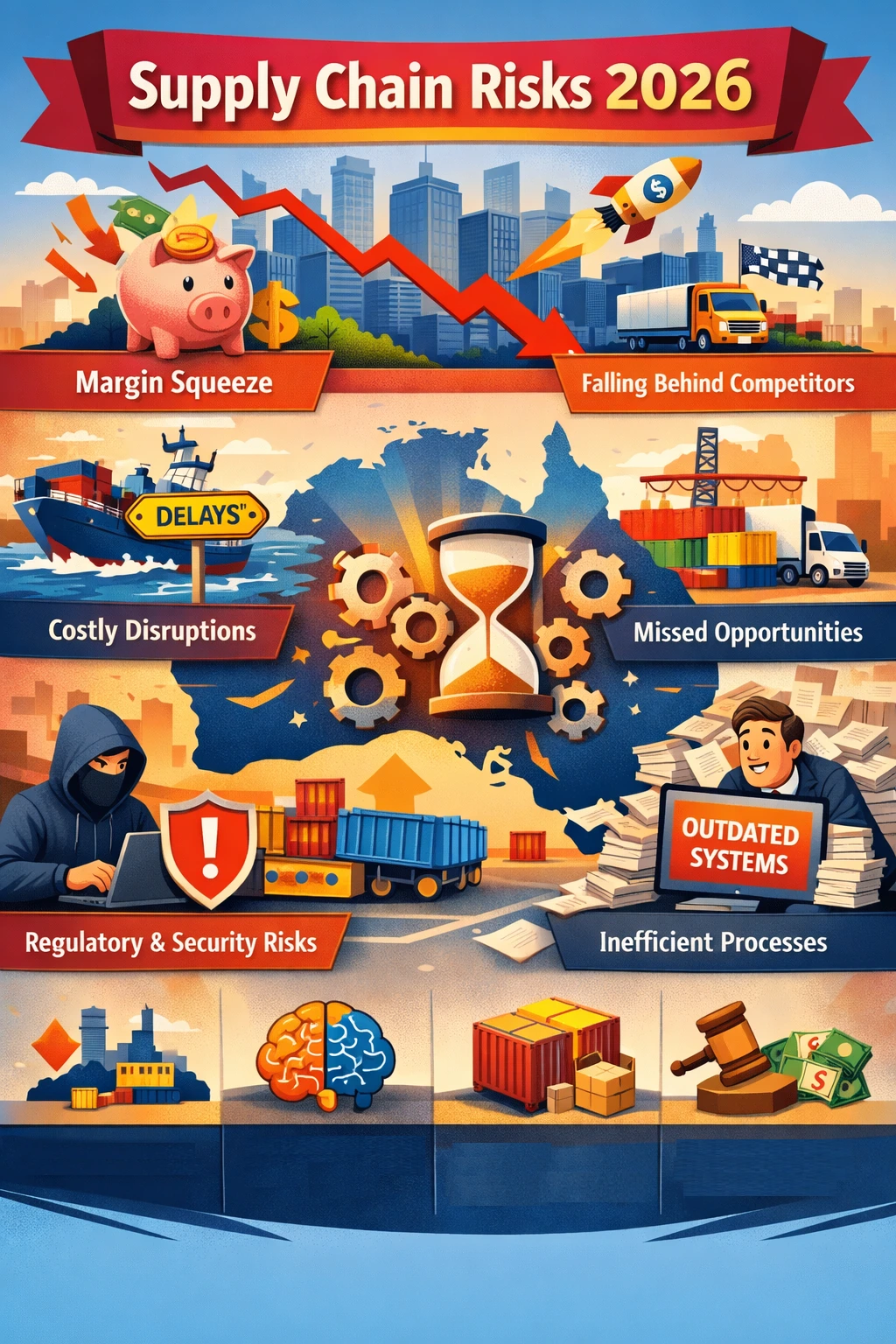
Sticking with outdated or one-size-fits-all solutions in 2026 carries increasing risks. The Australian supply chain management software market is growing rapidly (projected CAGR around 9-10%), driven by those who adopt advanced tools, while laggards fall behind.
Consequences of inaction include:
- Margin Compression: Rising costs without efficiency gains threaten viability, as seen in elevated insolvency rates.
- Competitive Disadvantage: Early AI adopters report up to 61% gains in operational efficiency and significant improvements in on-time delivery and cost control.
- Vulnerability to Disruptions: Without predictive capabilities, businesses face higher demurrage, lost sales, and reputational damage.
- Opportunity Costs: Manual processes waste executive and staff time that could focus on strategy, innovation, and growth.
- Regulatory Risks: Non-compliance or weak data sovereignty exposes organisations to penalties and security vulnerabilities.
In a data-driven economy, generic tools that do not integrate deeply with your unique processes or Australian regulatory landscape simply cannot deliver the agility and insights needed.
How Custom AI-Powered Procurement Software Delivers Transformation
Custom AI-powered procurement software moves beyond generic automation to create solutions laser-focused on your business's specific pain points, processes, and goals. Developed collaboratively by experts like C9, these systems integrate seamlessly with existing infrastructure, ensuring minimal disruption and maximum value.
Intelligent Sourcing & Procurement
AI analyses vast datasets for supplier risk assessment, predictive pricing, automated purchase orders, and negotiation support. This reduces maverick spending, shortens cycles, and unlocks 5-15% procurement savings while improving supplier relationships.
Real-Time Logistics Optimisation
Predictive routing, dynamic rerouting for weather or congestion, and demand forecasting tailored to Australian corridors (e.g., east-west long hauls) deliver 5-20% logistics cost reductions and 5-15% fuel savings.
Enhanced Visibility and Inventory Management
End-to-end digital twins and real-time dashboards eliminate silos, optimise stock levels (20-30% inventory reductions), and improve forecast accuracy by up to 30%.
Resilience, Compliance, and Security
Scenario planning for disruptions, agentic AI for autonomous responses, and Australia-compliant data residency (SOCI Act alignment) build robust, sovereign systems.
Seamless Integration and Scalability
Unlike off-the-shelf options, custom development ensures perfect fit with your databases, apps, and workflows, supporting phased implementation to address employee resistance and deliver fast ROI.
Feature-to-Benefit Examples:
Australian enterprises achieving intermediate AI maturity report average 61% operational efficiency gains, with targeted automation delivering up to 35% improvements in key areas.
Real-World Impact and Implementation Insights
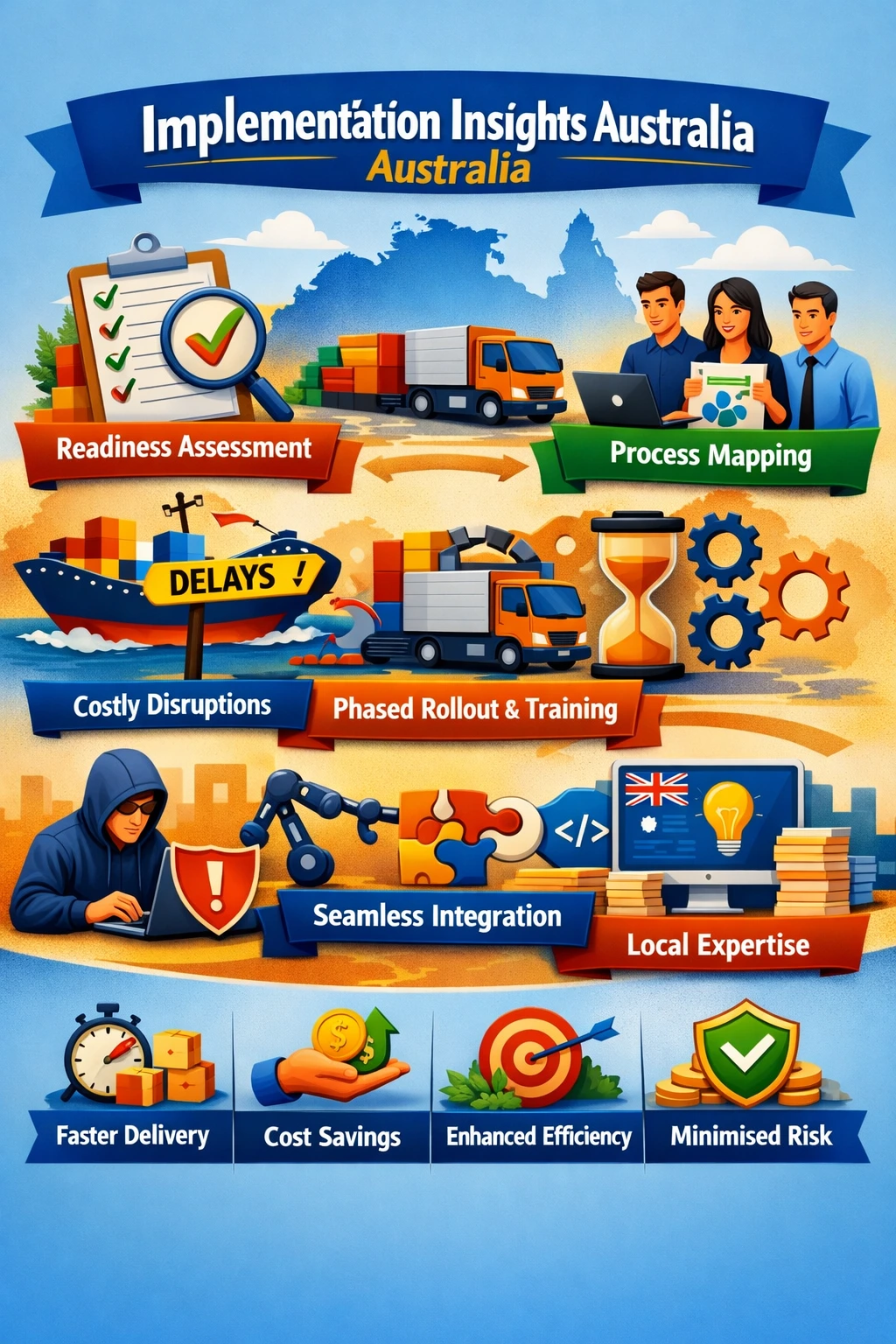
Industry parallels and projections show clear wins: improved on-time delivery, reduced administrative burdens (up to 50% in some processes), better working capital efficiency, and strategic focus for leadership.
Successful implementation involves:
- Readiness audits of legacy systems.
- Collaborative discovery to map unique processes.
- Phased rollouts with training and change management.
- Focus on integration expertise for quick value without rip-and-replace.
Custom solutions from experienced Australian developers minimise risks associated with previous vendor experiences.
Conclusion
In short: Custom AI-powered procurement software is redefining sourcing & procurement and logistics solutions for Australian businesses by converting inefficiencies into strategic advantages through intelligent automation, deep integrations, and actionable insights.
What’s next? Don’t allow legacy systems to limit your potential in 2026. Partner with C9, Australia’s leading custom software, apps, integration, and database developer, to create tailored AI solutions that drive efficiency, reduce costs, enhance resilience, and support sustainable growth.
Contact C9 today for a collaborative consultation and begin transforming your logistics and procurement operations.
Data Sources (Credible References)
- Appinventiv: AI in Logistics in Australia (2026).
- McKinsey: AI in Distribution Operations.
- IMARC Group, Statista, and industry reports on Australian logistics markets.
- PwC, Bain, and other analyses on AI procurement impacts.
- Australian Government: SOCI Act and National Freight Strategy.
- C9 official site.
Explore Related Insights on Microsoft Power Apps Integration & Development Solutions
Strategic Microsoft Power Apps in Melbourne
Custom Microsoft Power Apps Development for Sydney
AI Transparency Notice:
This article was produced with the assistance of artificial intelligence tools, including content drafting, visual asset creation, and audio generation. All content has been reviewed and approved by C9 prior to publication.