A comprehensive guide to professional database administration outsourcing for Australian business owners and executives
📊 EXECUTIVE SUMMARY
In Short:
Australian businesses haemorrhage an average of $500,000 annually due to poor data quality—duplicate customer records, compliance nightmares, failed AI initiatives, and decision-making paralysis. Manual database cleaning services no longer work at scale, whilst cheap "AI Cowboys" using "vibes coding" create technical disasters costing $60K-$150K to remediate. Professional AI-powered database administration outsourcing now delivers 30-50% cost savings through intelligent automation, Australian compliance expertise, and sustainable architecture. The critical difference: mandatory discovery processes that identify scope accurately, knowledge transfer ensuring you own your solution, and phased approaches delivering ROI within 6-8 weeks rather than waiting months. C9's hybrid offshore-onshore model combines enterprise-grade quality with SME-friendly pricing, skill-based rates, and flexible staff augmentation that scales with your needs.
What's Next?
By 2026, businesses without clean data infrastructure will fall irreversibly behind competitors leveraging AI for real-time decisions. The window for competitive advantage is closing—book a discovery call today to audit your data health, understand true costs, and unlock measurable ROI that quality data administration delivers. Early adopters are already seeing 200-400% returns within 12 months.
THE $500K PROBLEM HIDING IN YOUR BUSINESS
When did you last make a six-figure decision based on data you completely trusted?
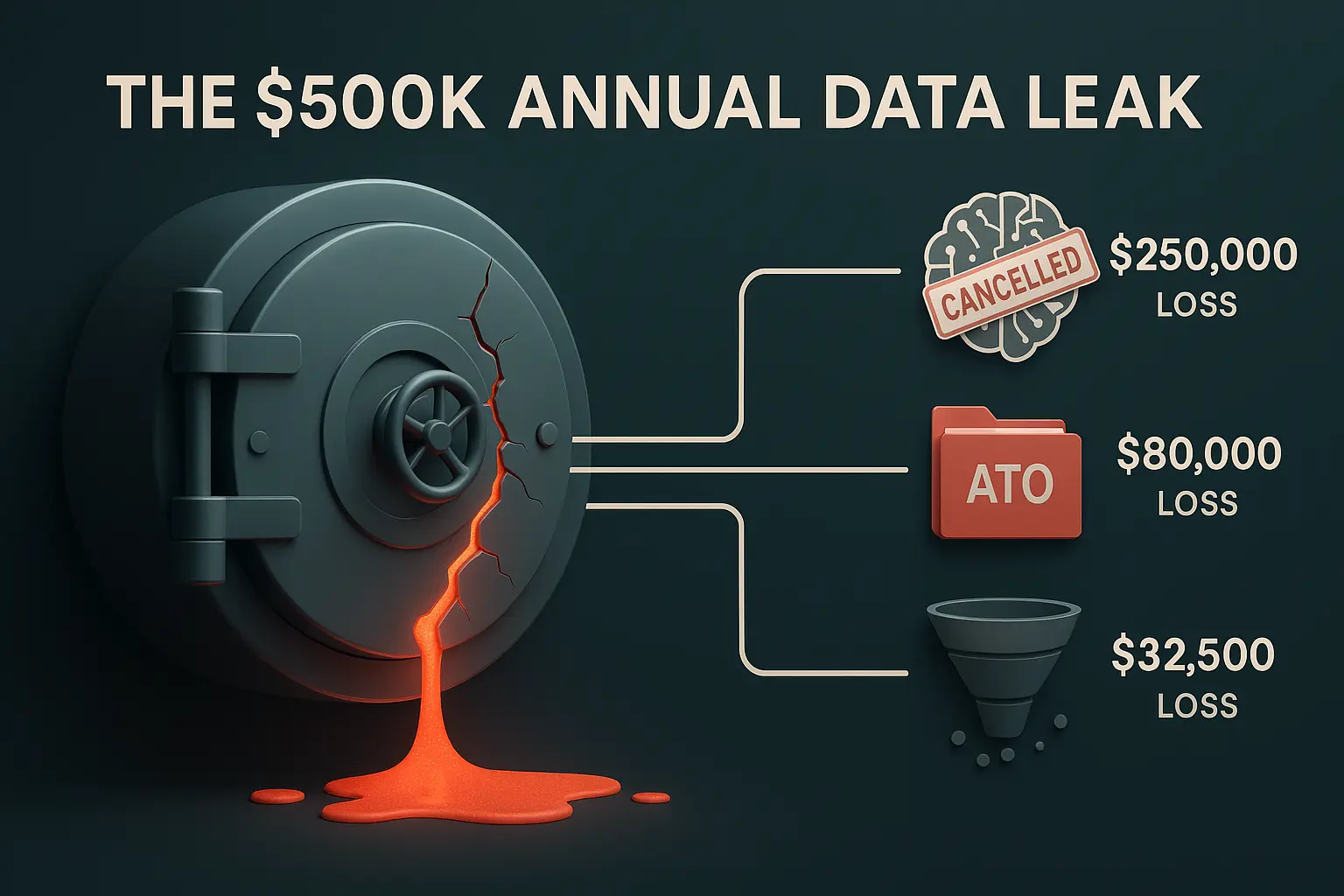
If you hesitated, you're experiencing what industry analysts call the "data confidence crisis"—and it's costing Australian businesses dearly. According to recent research, Australian organisations lose an average of nearly half a million dollars annually due to poor data integrity, yet most executives don't realise the silent killer impacting their bottom line.
What Dirty Data Looks Like in Reality
Consider these scenarios happening across Australian businesses right now:
Marketing Wastage: Your team invests $50,000 targeting 10,000 customers, but 30% are duplicates, 20% have incorrect email addresses, and 15% have unsubscribed. Result: $32,500 evaporated with zero ROI.
Financial Reconciliation Nightmares: Sales reports show 15% quarterly growth, but finance can't reconcile figures because CRM data conflicts with invoicing systems. Result: Board confidence erodes, strategic decisions stall for weeks.
ATO Audit Triggers: Payroll data discrepancies trigger full ATO investigations. Result: $80,000 in accounting fees, penalties, and hundreds of executive hours lost.
Failed Digital Transformation: Your $250,000 AI initiative gets shelved after six months because data scientists cannot access clean training datasets. Result: Investment wasted, your business falls 12 months behind competitors.
These aren't hypothetical scenarios—this is the daily reality for Australian enterprises from Sydney startups to Melbourne-based corporations struggling with database administration outsourcing challenges.
WHY TRADITIONAL DATABASE CLEANING SERVICES NO LONGER WORK
The velocity and volume of modern business data have fundamentally changed. Your business generates thousands of new records weekly across CRM systems, accounting platforms, marketing automation, e-commerce transactions, and operational databases. Manual data administration cannot keep pace.
The Manual Cleaning Trap
You hired a data analyst, gave them six months to "clean up the database." What happened? They spent 80% of their time on manual de-duplication. By the time they finished one system, two others had degraded. They quit after eight months due to burnout. You're back to square one, now $120,000 poorer.
Why manual approaches fail: Human beings cannot match data velocity. Manual cleaning is analogous to bailing out a sinking ship with a teaspoon whilst water pours through the hull.
The Offshore Freelancer Disaster
Attracted by $25/hour rates, you hired an offshore freelancer promising complete CRM cleaning in two weeks. The outcome? They deployed basic scripts that incorrectly merged customer records. Customer complaints skyrocketed from wrong contact information. Your sales team lost trust in the CRM entirely. Professional remediation cost $40,000 to undo the damage.
Why cheap solutions destroy value: Database cleaning services require domain expertise, business context understanding, and sophisticated algorithms. Generic scripts obliterate data quality rather than enhance it.
THE "AI COWBOY" EPIDEMIC: WHY VIBES CODING WILL DESTROY YOUR BUSINESS
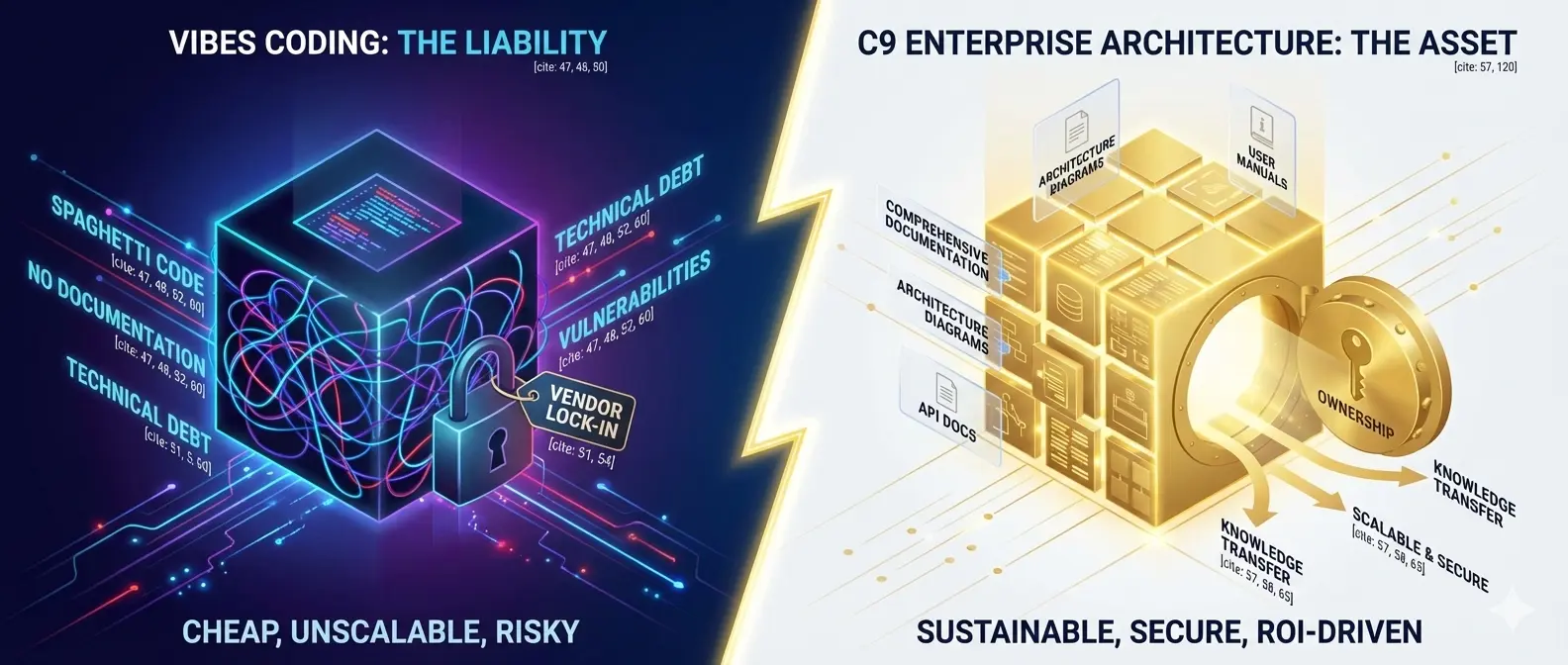
The most dangerous trend in 2026 is the proliferation of "AI Cowboys"—self-proclaimed experts flooding LinkedIn, Upwork, and Fiverr with promises of AI-powered solutions at fraction-of-cost pricing.
Understanding "Vibes Coding"
"Vibes coding" describes developers who use AI tools like ChatGPT or Cursor to generate entire applications without understanding underlying code. They cobble together no-code platforms (Bubble, Zapier, Make) without proper architecture, focus on making demonstrations "look functional" without testing edge cases, security, or scalability, and deliver solutions based on superficial vibes rather than engineering principles.
76% of data professionals still rely on spreadsheets as their primary cleaning tool—imagine what happens when AI Cowboys attempt enterprise database administration with zero formal training.
The Gray Areas and Hidden Dangers
No Knowledge Transfer Equals Permanent Vendor Lock-In
AI Cowboys don't document work because they often don't understand the code themselves. The "solution" becomes a black box of AI-generated spaghetti code with no architecture diagrams, technical documentation, or proper handover processes.
What this means: You're completely dependent on them for any modifications. If they disappear—and they frequently do—you possess an unmaintainable system. Hiring professionals to reverse-engineer costs 3-5x the original development investment.
C9's Advantage: Complete knowledge transfer including comprehensive documentation, architecture diagrams, detailed code walkthroughs, and hands-on training sessions. You own your solution, not merely access to it.
Technical Debt Time Bombs
Vibes coding creates compounding technical debt through security vulnerabilities (AI-generated code frequently includes outdated libraries, hardcoded credentials, SQL injection vulnerabilities), scalability nightmares (functions adequately for 10 users, crashes at 100), integration failures (breaks when connecting to other business systems), and data integrity catastrophes (no validation rules, no referential integrity, no backup strategies).
Real-world example: A Melbourne e-commerce business hired an AI Cowboy to build "custom inventory management" for $8,000. It performed beautifully for two months. Then Black Friday arrived. The system crashed under transaction load, orders vanished, customer data corrupted. They lost $400,000 in revenue and spent $80,000 rebuilding properly with enterprise-grade architecture.
C9's Advantage: Enterprise-grade architecture from inception, built for scale, security, and maintainability—not just demonstration purposes.
Compliance and Legal Landmines
AI Cowboys lack understanding of Australian regulatory frameworks including Privacy Act compliance (data handling, consent mechanisms, retention policies), ATO requirements (audit trails, data integrity for tax reporting), and industry-specific regulations (healthcare My Health Records integration, financial services AUSTRAC requirements, government PSPF frameworks).
The outcome: Your "cheap" solution violates privacy legislation. You face OAIC investigations, potential fines reaching $2.5 million, and irreparable reputational damage.
C9's Advantage: Specialisation in database administration outsourcing for regulated Australian industries ensures compliance-ready solutions from day one.
THE PROFESSIONAL SOLUTION: AI-POWERED DATABASE CLEANING SERVICES
When executed by qualified professionals rather than AI Cowboys, AI-powered database cleaning services transform business operations fundamentally.
What Professional Data Administration Actually Delivers
Automated Intelligence, Not Generic Scripts
Professional database cleaning services employ machine learning models trained on your specific business rules and data patterns, natural language processing to standardise text fields (names, addresses, company nomenclature), pattern recognition identifying duplicates even when records don't match exactly, predictive analytics auto-completing missing data with statistically validated confidence levels, and continuous learning systems that improve accuracy over time.
Example: C9's AI identifies that "John Smith - Smith Enterprises" and "J. Smith - Smith Ent Pty Ltd" represent identical contacts, even though traditional de-duplication rules would miss this relationship entirely.
Australian-Specific Customisation
Generic international tools don't comprehend Australian data formats including ABN validation (11 digits with weighted algorithm verification), TFN privacy requirements, Australian address structures (suburbs, postcodes, state abbreviations), mobile number formats (04XX XXX XXX), BSB and account number validation, and industry-specific identifiers (AHPRA numbers for healthcare, Legal Practice IDs for law firms).
C9's bespoke database cleaning services are configured for Australian business requirements from initial deployment.
Enterprise Integration Capabilities
Professional database administration outsourcing connects seamlessly with CRM systems (Salesforce, HubSpot, Zoho), accounting platforms (Xero, MYOB, QuickBooks), ERP systems (SAP, NetSuite, Odoo), marketing automation (Mailchimp, ActiveCampaign), and custom applications plus legacy databases.
The result: Elimination of data silos. One authoritative source of truth across your entire business ecosystem.
Compliance-First Architecture
Solutions architected with built-in support for Australian Privacy Principles (APP), ATO data integrity requirements, AUSTRAC ML/CTF reporting (reforms commencing March 31, 2026), industry-specific regulations, and data sovereignty (Australian-hosted infrastructure, APRA-compliant hosting).
WHY DISCOVERY CALLS ARE NON-NEGOTIABLE
Business owners frequently resist discovery calls, viewing them as unnecessary sales tactics. This perspective costs tens of thousands of dollars through scope misunderstandings and project failures.
What Happens When You Skip Discovery
The "Just Give Me a Price" Scenario:
Client request: "We need our CRM cleaned. 50,000 records. What's your price?"
AI Cowboy response: "$5,000. Completed in 2 weeks."
C9 response (without discovery): "Approximately $15,000-$45,000 depending on complexity discovered during technical audit."
Client decision: Hires AI Cowboy because of lower price point.
Three months later: CRM corrupted, 3,000 customer records permanently lost, sales team cannot function, customer complaints flooding support channels, $150,000 required to rebuild plus incalculable lost revenue.
What discovery would have revealed: The CRM contained 7 years of legacy data without standardisation, customer records linked to 3 additional systems (accounting, support ticketing, marketing automation), 40% of records contained custom fields with business-critical data, compliance requirements mandated 7-year data retention (financial services regulations), and integration requirements existed with newly launched e-commerce platform.
Reality: This wasn't a $5,000 "clean the CRM" task. This was a $45,000 data architecture transformation requiring comprehensive system integration strategy, detailed data migration planning, compliance validation frameworks, custom business rules development, staff training programmes, and phased rollout preventing business disruption.
C9's Discovery Process Explained
Phase 1: Initial Discovery Call (60-90 minutes, FREE)
We systematically cover business context understanding (what problems you're solving, business impact of current situation, previous attempts, involved systems, key stakeholders), technical environment assessment (databases/CRM/ERP platforms in use, record counts/user numbers/transaction volumes, existing integrations, current data workflows, data creation/modification/access points), compliance and regulatory requirements (industry sector, applicable regulations including ATO/AUSTRAC/Privacy Act/industry-specific frameworks, audit requirements, mandated data retention policies), success criteria definition (measurable success indicators, critical metrics including accuracy percentages/processing time/cost savings, timeline urgency, realistic budget parameters), and risk and constraint identification (systems requiring zero downtime, data that cannot be altered due to historical compliance, mission-critical integrations, available internal resources).
Outcome: Mutual determination of fit, assessment of whether Phase 2 technical discovery is warranted.
Phase 2: Technical Discovery and Audit (1-2 weeks, $3,000-$8,000)
If aligned after Phase 1, we conduct comprehensive technical audits analysing data quality (automated database scans, duplicate rate identification, missing data percentage calculations, format inconsistency mapping, data relationship and dependency documentation, data freshness and update frequency assessment, data quality scoring on 0-100 scale), system architecture (current system landscape documentation, integration point and data flow identification, technical debt and risk assessment, security and access control review, scalability limitation evaluation), compliance gap analysis (current state comparison against regulatory requirements, compliance violation and risk identification, data governance maturity assessment, audit trail capability review, privacy and security control mapping), ROI modelling (current cost calculations including manual labour/errors/inefficiency, projected savings from automation, risk reduction estimation for compliance/data breach scenarios, productivity gain modelling, payback period calculation), and solution architecture design (custom database cleaning workflow design, integration approach planning, data governance framework definition, phased implementation roadmap creation, quick win versus long-term improvement identification).
Deliverables: Comprehensive 30-50 page audit report, data quality scorecard, risk assessment matrix, recommended solution architecture, detailed project plan with phases and milestones, and discovery-based pricing accurate to the nearest day rather than vague indicative estimates.
Investment: Typically $3,000-$8,000 depending on complexity, credited toward your project if you proceed. If you choose not to proceed, you retain a blueprint worth 10x your investment.
WHAT SEPARATES C9 FROM HUNDREDS OF OTHER DEVELOPERS
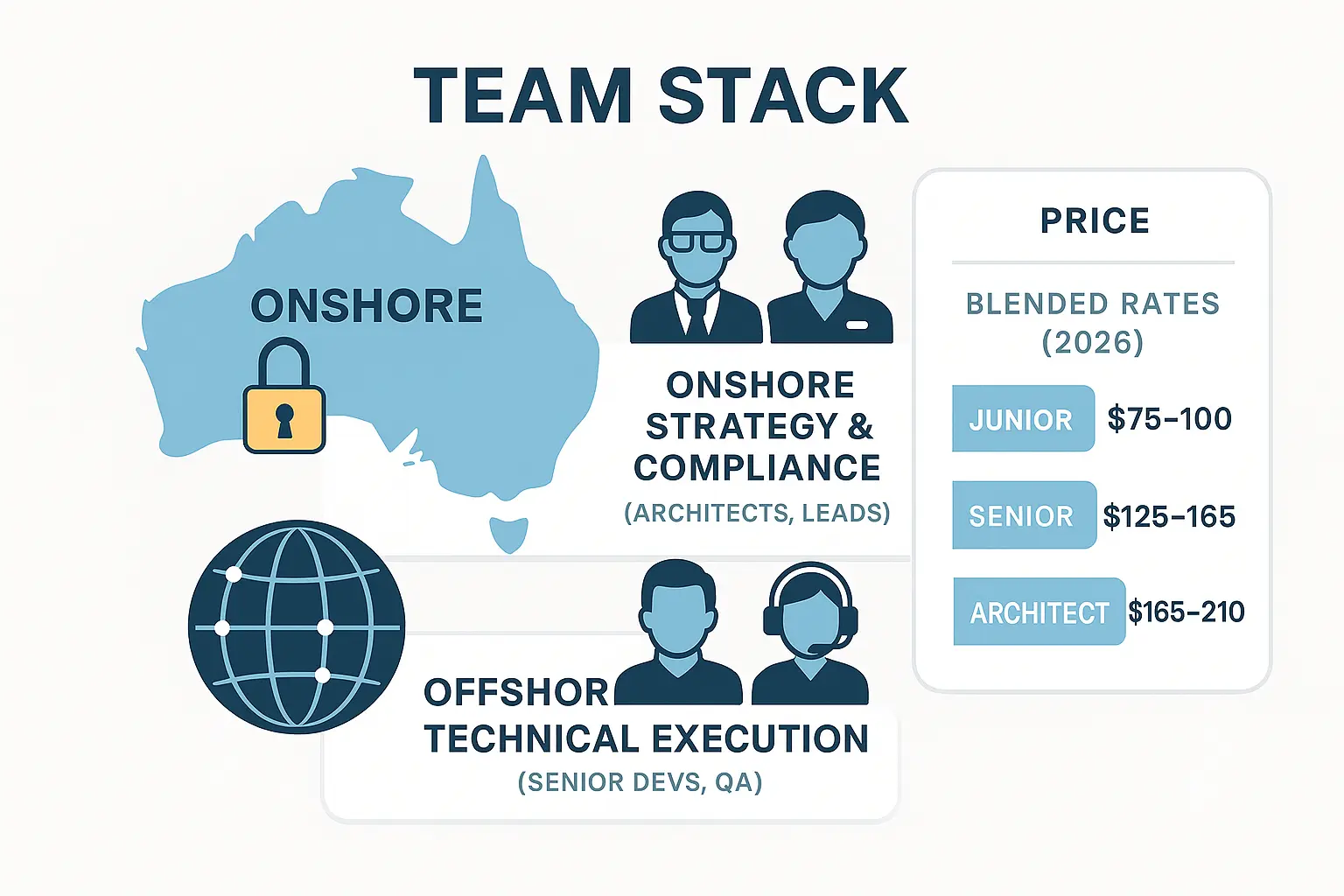
Hybrid Offshore-Onshore Excellence
The reality: 100% local Australian developers cost 3-4x more than blended teams, whilst 100% offshore teams lack local business context and compliance knowledge.
C9's hybrid model combines:
Onshore Australian-based expertise: Solution architects and technical leads providing strategic direction, client relationship managers ensuring communication excellence, compliance and regulatory specialists with deep Australian law knowledge, industry domain experts understanding sector-specific requirements, and experienced project managers coordinating delivery.
Offshore C9 directly-hired talent: Senior developers and engineers executing technical implementation, QA and testing specialists ensuring quality, DevOps and infrastructure teams managing deployment, data analysts conducting analysis, and support team members providing assistance.
The advantages: Australian business context from onshore leaders who comprehend local regulations, business culture, and industry requirements; cost efficiency from offshore development talent delivering 40-60% savings versus 100% local teams; direct control through our direct hiring and management of offshore staff rather than third-party outsourcer dependency; time zone coverage providing extended hours for urgent support requirements; and quality assurance through onshore team review of all offshore deliverables.
Knowledge Transfer, Not Vendor Lock-In
The AI Cowboy approach: Build opaque black box systems, maintain perpetual client dependency.
The C9 approach: Transfer complete ownership and comprehensive understanding through extensive documentation (system architecture diagrams, database schema documentation, data flow diagrams, API documentation, user manuals, administrator guides, troubleshooting playbooks), comprehensive training (technical walkthroughs for IT teams, administrator training for day-to-day management, end-user training sessions, video tutorials and recorded sessions, ongoing support during transition periods), thorough technical handover (complete source code with extensive comments, development environment setup guides, deployment procedures, backup and disaster recovery procedures, monitoring and alerting configuration), and strategic advisory (future roadmap recommendations, optimisation opportunity identification, compliance update guidance, technology evolution advisory).
Why this matters: You're never held hostage. You maintain the system in-house, engage another provider, or continue with C9—your choice entirely.
Skill-Based Pricing Structure
Most agencies charge uniform rates regardless of skill level—junior developers, senior architects, and QA testers all billed identically at $150/hour. The result: you overpay for junior work whilst underpaying for senior expertise, meaning you don't access genuine senior talent.
C9's FY25/26 Staff Augmentation Rates (Subject to CPI adjustment)
Our blended rates assume 60-70% offshore and 30-40% onshore resource mix:
- Junior Developer: $75-$100/hour blended
- Mid-Level Developer: $95-$130/hour blended
- Senior Developer: $125-$165/hour blended
- Solution Architect: $165-$210/hour blended
- Database Administrator: $110-$150/hour blended
- QA/Testing Specialist: $80-$110/hour blended
- DevOps Engineer: $120-$155/hour blended
Additional discounts available for: Long-term contracts (12+ months) receiving 10-15% discount, multi-resource contracts (3+ resources) receiving 10-20% discount, and prepaid packages receiving 5-10% discount.
Monthly packages include hour rollover: Stockpile hours during business-as-usual periods, deploy for major feature development without additional budget approval. For example, purchase Full-Time package (160 hours monthly). Month 1 uses 120 hours (40 roll over). Month 2 uses 140 hours (60 total rollover). Month 3 uses 180 hours (20 from rollover, 160 fresh). Month 4 major feature launch uses 240 hours (160 fresh plus 80 rollover).
STAFF AUGMENTATION: FLEXIBILITY WITHOUT COMPROMISE
Why 3-6 Month Minimum Lock-In Contracts Are Superior
Month-to-month sounds flexible, but:
Ramp-up consumes 2-3 weeks for resources to understand your business, systems, codebase, and team dynamics. Cancellation after 1-2 months means you paid for ramp-up whilst receiving minimal productive output. Resources on monthly contracts get assigned to other projects whenever possible, creating competition for their time resulting in slower delivery, reduced attention, and lower quality. Knowledge retention becomes impossible—just when developers truly understand your system (month 3-4), you cancel, forcing restart from zero next time. Monthly rates run 20-30% higher accounting for instability. Month-to-month prevents long-term thinking, encouraging quick fixes instead of sustainable solutions.
3-6 month lock-in benefits:
Dedicated commitment means the resource prioritises your work, becomes embedded in your team, develops deep system knowledge. Superior economics through 15-25% discounts mean lower hourly costs for better quality. Long-term thinking enables developers to architect for scale and maintainability because they know they'll support it. Relationship building means by month 3-4, they're team members understanding your business goals, not merely vendors. Hour rollover accumulates unused hours for larger feature development projects (monthly contracts don't permit this). Predictable budgeting provides exact quarterly spending visibility.
Critical Staff Augmentation FAQs
Remote Work Model: C9's staff augmentation is 100% remote. No one attends your office 9-5. No expectation of on-site presence. Remote collaboration occurs via Zoom, Teams, and Slack. Asynchronous communication happens through project management tools (Jira, Asana, ClickUp). Work is deliverable-focused, not time-tracking focused.
Performance Guarantee: 30-day performance guarantee ensures if you're unsatisfied with a resource within the first 30 days, we replace them at no cost. Replacement happens within one week, no questions asked.
Resource Dedication: 3-6 month contracts provide dedicated resources assigned exclusively to your projects (they may have other small clients for remaining capacity, but you receive priority). Monthly contracts involve shared resources balancing multiple clients based on available capacity.
PRICING TRUTH: WHY INDICATIVE PRICING DESTROYS VALUE
The Indicative Pricing Trap Exposed
Typical indicative pricing scenario: Client requests quote for "CRM database cleaning." Agency responds: "Based on your description, we estimate $25,000-$45,000 over 8-12 weeks."
What happens: Week 3 discovers custom fields adding complexity (revised estimate: $35,000-$55,000). Week 6 reveals complex accounting integration (revised estimate: $45,000-$65,000). Week 9 uncovers international addresses and compliance requirements (final cost: $68,000). Week 15 delivers project, 3 weeks late, $23,000 over initial estimate.
Root cause: Initial estimate was guesswork based on limited information. No discovery meant unknowns discovered mid-project. Scope crept from undefined requirements. Relationship damaged by "surprise" costs.
Discovery-Based Pricing: The Math
Project example: E-Commerce Database Migration and Cleaning
Indicative pricing approach (competitor):
- Estimated effort: 8-12 weeks
- Estimated cost: $40,000-$60,000
- Assumptions: Standard migration, basic cleaning, straightforward integration
Reality after mid-project discoveries:
- Actual effort: 26 weeks (16 weeks late)
- Actual cost: $127,000 (115% over budget)
- Relationship: Strained
- Client satisfaction: 4/10
C9 discovery-based approach:
Discovery Phase (2 weeks, $6,500): Comprehensive audit revealing 150,000 customer records (not 50,000 assumed), 8,000 product SKUs with variants (not 2,000 simple products), 7-year ATO compliance retention requirement, 45 custom fields requiring business logic (not 10), five system integrations (not just Xero), 35% data quality issues requiring validation/enrichment, and zero-downtime requirement necessitating phased migration.
Phase 1: Foundation and Data Cleaning (6 weeks, $34,720): Customer database cleaning and de-duplication, address validation and enrichment, data export from Magento, data quality framework setup. Immediate ROI: Marketing campaign waste reduced 25%, saving $52,000 annually.
Phase 2: Core Migration (8 weeks, $55,552): Product catalogue migration, order history migration (7-year compliant), custom field mapping, Xero integration, testing and validation. Immediate ROI: Accounting reconciliation time reduced from 5 days to 1 day monthly, saving $28,000 annually.
Phase 3: Extended Integrations (6 weeks, $38,688): Mailchimp integration, ShipStation integration, warehouse API custom integration, performance optimisation, staff training, 30-day post-launch support. ROI: Complete ecosystem integration delivering $80,000 annual ongoing savings.
Total investment: $135,460 over 22 weeks versus $127,000 over 26 weeks (indicative approach), but with zero surprises, complete client control, early ROI funding later phases, and 9/10 client satisfaction.
BREAKING PROJECTS INTO STAGES FOR EARLY ROI
The Traditional All-or-Nothing Trap
Traditional approach: CRM transformation quoted at $120,000 over 16 weeks, all-or-nothing commitment. You commit $120K upfront, wait 16 weeks for delivery, hope it functions correctly, receive no ROI until Week 17, and if it fails, you've lost $120K entirely.
The C9 Staged Approach
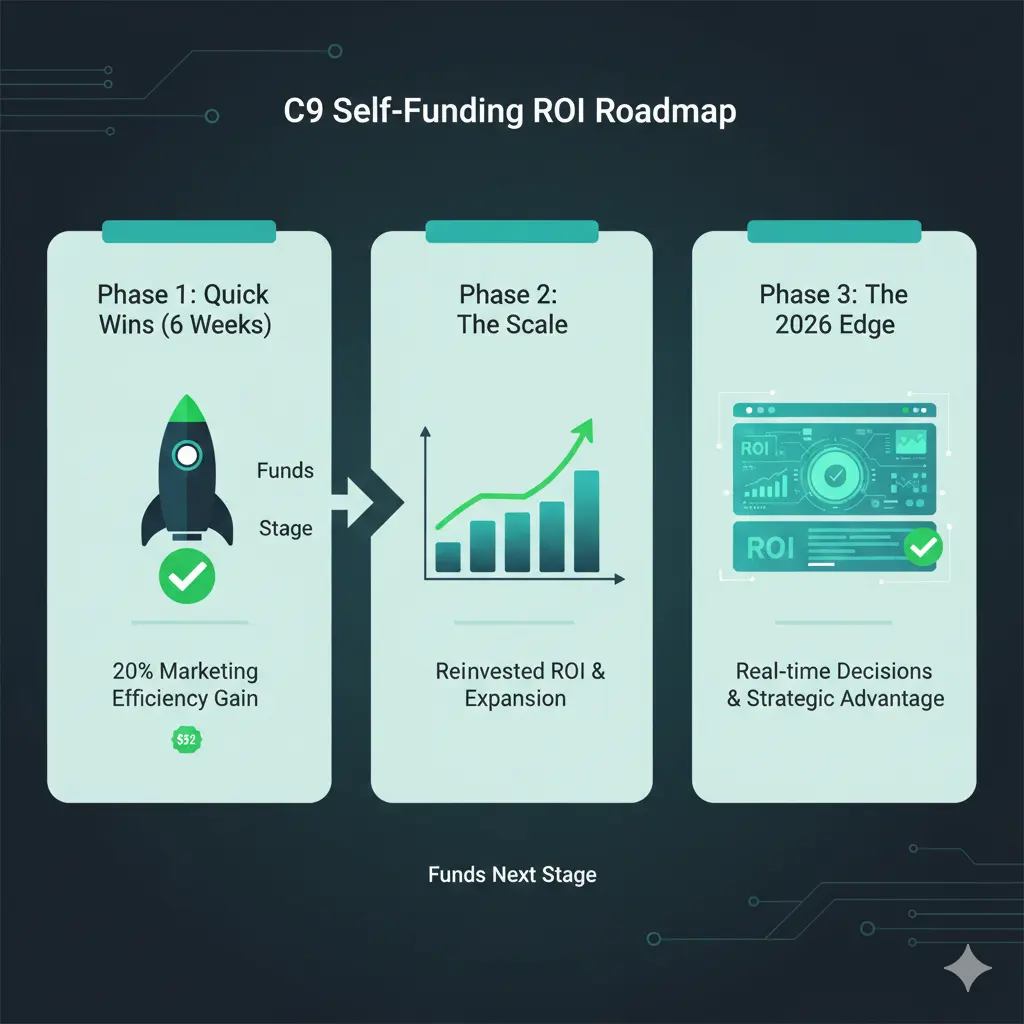
Phase 1: Quick Wins (6 weeks, $28,000): Focus on highest-ROI problems first—duplicate removal, contact enrichment, basic reporting dashboard, critical integration. ROI after 6 weeks: Marketing efficiency improves 20% equalling $32,000 annual savings. Phase 1 self-funds in 10.5 months. Decision point: ROI proven (proceed to Phase 2), results unclear (pause and optimise Phase 1), or doesn't work (stop with only $28K invested, not $120K).
Phase 2: Core Transformation (8 weeks, $52,000): Funded by Phase 1 accumulating savings. Full CRM migration, advanced integrations, workflow automation, team training. ROI after Phase 1+2: Sales productivity increases 25% generating $85,000 additional annual revenue, support efficiency improves saving $28,000 annually. Combined ROI: $145,000 annually. Payback: 6.6 months. Phase 3 funded entirely by savings.
Phase 3: Advanced Features (6 weeks, $40,000): Funded by Phase 1+2 ROI. AI-powered lead scoring, advanced analytics and forecasting, mobile app integration, custom reporting.
Total investment: $120,000 (identical to traditional) over 20 weeks versus 16 weeks (4 weeks longer), but with superior cashflow ($28K Week 1, $52K Week 8, $40K Week 16 versus $120K Week 1), earlier ROI (Week 7 versus Week 17), reduced risk (can stop at any phase, maximum risk per decision $28K-$52K versus $120K), and complete control (evaluate and decide at each phase versus all-or-nothing).
Real Success Story: Retail Chain Transformation
Client: 12-location retail chain with inventory, CRM, and accounting chaos.
Phase 1: Pilot Location (8 weeks, $32,000): Centralised inventory database for Location #1, POS and accounting integration, real-time reporting dashboard. Results: Stock-outs reduced 40% ($18,000 annual savings for one location), overstock reduced 30% ($22,000 savings), inventory count labour efficiency gained 5 hours weekly ($12,000 annually). Single location ROI: $52,000 annually. Payback: 7.4 months.
Phase 2: Scale to All Locations (12 weeks, $78,000): Deploy proven approach to remaining 11 locations, add cross-location transfer capabilities, centralised purchasing insights. Results: Company-wide ROI $624,000 annually (12 locations × $52K), centralised purchasing leveraged for 15% supplier discounts adding $180,000 annually. Total Phase 1+2 ROI: $804,000 annually on $110,000 investment. Payback: 1.6 months.
Phase 3: Advanced Analytics (6 weeks, $38,000): Predictive inventory forecasting, customer behaviour analytics, supplier performance tracking. Results: Demand forecasting reduces stock issues further ($95,000 annually), customer insights improve marketing ROI ($120,000 annually). Phase 3 ROI: $215,000 annually.
Total project ROI: $1,019,000 annually on $148,000 investment. Project self-funded in 6 weeks after Phase 2 completion.
TAKE ACTION: BOOK YOUR DISCOVERY CALL TODAY
Your Three Paths Forward
Path 1: Do Nothing
- Continue losing $500K annually to dirty data
- Fall further behind competitors
- Risk compliance violations
- Watch AI initiatives fail
- Cost: Everything (opportunity cost is massive)
Path 2: Go Cheap (AI Cowboys)
- Hire freelancer or vibes coder
- Receive initial "solution" for $5K-$15K
- Watch it break in 3-6 months
- Spend $60K-$150K fixing disaster
- Cost: $65K-$165K + 12 months lost + reputational damage
Path 3: Do It Right (C9)
- Invest in proper discovery ($3K-$8K)
- Receive accurate pricing and phased approach
- See ROI in 6-8 weeks from Phase 1
- Use savings to fund subsequent phases
- Own sustainable solution with knowledge transfer
- Cost: Project-dependent, but self-funding through ROI
- 5-year value: Typically $500K-$3M+ net gain
Next Steps
Step 1: Book Free Initial Discovery Call
What we'll cover (60-90 minutes): Your specific database challenges, current systems and data landscape, business impact and urgency, compliance and regulatory requirements, success criteria and budget reality-check.
What you'll receive: Honest assessment of fit, initial recommendations (even if you don't hire us), understanding of proper discovery scope, clarity on pricing approach and timelines.
Investment: FREE, no obligation
Book now: /Company/Contact
Step 2: Technical Discovery
Comprehensive technical audit including data quality assessment, system architecture documentation, compliance gap analysis, ROI modelling, detailed project plan with phases.
Investment: $3,000-$8,000 (credited toward project if you proceed)
Timeline: 1-2 weeks
Step 3: Execute Phase 1 (Quick Wins)
Start small, prove value. Focus on highest-ROI problems first. 6-8 week timeline. Typical investment: $25K-$45K. See results in weeks, not months.
CONTACT C9 AUSTRALIA
Website: https://www.c9.com.au
LinkedIn: Follow C9 Australia for ongoing insights
FINAL THOUGHT
Data is the foundation of every business decision you make.
Dirty data equals bad decisions.
Clean data equals competitive advantage.
The question isn't whether you need professional database cleaning services.
The question is: How much longer can you afford to wait?
Every week costs you lost revenue, compliance risk, and competitive disadvantage. The businesses succeeding in 2026 are those who invested in data quality in 2024-2025.
Book your free discovery call today. Let's transform your data into your competitive weapon.
BOOK DISCOVERY CALL NOW →
ABOUT C9 AUSTRALIA
C9 is Australia's leading custom software, apps, integration, and database developer, specialising in bespoke database administration outsourcing for Australian businesses who refuse to compromise on quality, compliance, or ROI.
Unlike AI Cowboys and vibes coders, we deliver enterprise-grade solutions with complete knowledge transfer, hybrid offshore-onshore teams, and discovery-based pricing that actually works.
With over 18 years of experience serving 200+ Australian businesses across retail, healthcare, finance, manufacturing, and government sectors, we understand the unique challenges of Australian data administration, compliance requirements, and business culture.
Our commitment: No vendor lock-in, complete transparency, measurable ROI, and sustainable solutions you can maintain long-term.
Ready to stop losing $500K annually to dirty data? Let's talk.
REFERENCES AND FURTHER READING
Industry Research and Statistics
- IBM Cost of a Data Breach Report 2024 - Australian data breach cost statistics
- Gartner Data Quality Market Guide 2025 - Industry trends and best practices
- Australian Bureau of Statistics - Business data management practices
- OAIC (Office of the Australian Information Commissioner) - Privacy compliance guidelines
- ATO Data-Matching Program Guidelines - Tax compliance requirements
- AUSTRAC ML/CTF Compliance Guide - Financial services data requirements
Regulatory and Compliance Resources
- Australian Privacy Principles (APP) Guidelines - https://www.oaic.gov.au
- AUSTRAC Reporting Requirements - https://www.austrac.gov.au
Technical Resources
- SQL Server Best Practices for Australian Businesses
- PostgreSQL Data Quality Extensions and Tools
- MongoDB Schema Design for Compliance
- Data Governance Framework for Australian SMEs
- AI and Machine Learning for Database Administration
C9 Resources
- C9 Database Administration Services - /Solutions/Custom-Software-Development/Database-Developers
- C9 Case Studies - Australian Business Transformations
- C9 Compliance Solutions - Industry-Specific Guides
- C9 Knowledge Base - Technical Documentation and Best Practices
Additional Reading
- "The Data Quality Guide for Australian Businesses" - C9 Whitepaper
- "Database Compliance Checklist 2026" - Free downloadable resource
- "ROI Calculator for Database Cleaning Projects" - Interactive tool
- "Staff Augmentation vs Full-Time Hiring" - Comparative analysis
Disclaimer: Pricing and service details are accurate as of February 2026 and subject to change. All client examples are composites based on typical scenarios whilst protecting client confidentiality. ROI projections are based on historical averages and individual results may vary. For current pricing and detailed proposals, please contact C9 directly for a discovery call.
© 2026 C9 Australia Pty Ltd. All rights reserved.
Explore Related Insights on Database Development Solutions
Custom SQL Dashboards vs Generic BI Tools: Which Delivers Better ROI for Australian Companies?
Outsourced DBA vs. In-House Database Team: The 2026 Cost-Benefit Analysis
AI-Powered Database Cleaning: How Australian Businesses Save 30-50% on Data Management in 2026
AI-Powered Database Cleaning: How Machine Learning is Revolutionising Data Quality in 2026
Unlock Game-Changing Insights: How SQL Server 2025's Horizontal Fusion and DAX Upgrades Supercharge Your Business Analytics
Strategic Microsoft Power Apps in Melbourne
Custom Microsoft Power Apps Development for Sydney
AI Transparency Notice:
This article was produced with the assistance of artificial intelligence tools, including content drafting, visual asset creation, and audio generation. All content has been reviewed and approved by C9 prior to publication.